What I Learned in 2008


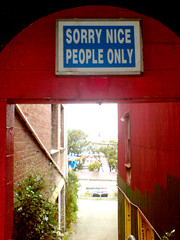
Learn Sign
Originally uploaded by philosophygeek

Robert Hruzek regularly asks writers to share their experiences. His Middle Zone Musings blog is currently hosting "Blogapalooza" … where Robert hands his site over to anyone willing to share their lessons for 2008. The initial aim was for 100 contributors, but it has now sailed well past the initial goal (and I believe, Robert is still willing to post your own lessons should you be willing to share!).

Each of the contributors is required to identify one of their own posts from every month in 2008 – and to explain why it resonates for them.

My "what I learned …" contribution is now live, and you can read it here. But don't stop there. Check out the other hundred or so. There's gold to be found.

Reblog this post [with Zemanta]

TwitterPower

2586969604_b4f7e4877d_o_d
When Todd Andrlik put together the Power 150 list I was amazed. He brought together a series of available metrics to rank 150 of the top marketing blogs in the world — not only was the approach sound, but the effort involved to identify, calculate and so on would have been a significant amount of work.

Later, when the Power 150 came under the auspices of Ad Age, it expanded to cover several hundred marketing and related blogs from across the globe. And while the calculations and rankings have become automated, Charlie Moran from Ad Age continues to refine and grow the list as a great resource.

However, with the growth of Twitter and other micro-blogging platforms, the conversations and discussions have shifted away from the more static blogs. Not content with the asynchronous comment-and-respond discussions offered by blogging systems, we are now turning to all-in, open conversation on Twitter. Mack Collier, for example, now spends a significantly larger amount of time on Twitter than he does on his blog … and he is not alone. And this is where the Power 150 loses a little of its shine — as it only covers blogs, it is missing more of the "conversation" than it is covering.

Recently, Armando Alves, built upon the Power 150 to produce the Twitter Power 150 – a ranking that assesses the top 300 blogs together with the Twitter accounts of the bloggers – to produce a single score across the blogging and micro-blogging formats. The change in rankings is amazing. Seth Godin, who unassailably leads the Power 150, but does not use Twitter, scrapes into the top 150 at #144.

Be sure and take a look at the full list over at Armando's site. What do YOU think? Is it a game changer? Is it a more relevant way of quantifying marketing's social media conversations?

What the Tweet?

At year’s end we all begin to turn our attention to the future. We re-evaluate the trends that have ebbed and flowed, and we look over the horizon towards that as yet, undiscovered country.

Joe Pulizzi rounded up a number of folks to get their content marketing predictions for 2009 – and Scott Drummond pulled together a mammoth list of predictions over at MarketingMag. I won’t be making predictions this year – there is more than enough speculation out there. However, I will put forward a couple of facts that mat be useful for you to consider.

Back in November I felt that social media was mainstreaming … and it seemed an opportune time to encourage marketers (in the midst of planning for 2009) to CONTINUE to innovate despite (or perhaps “especially because of”) the changing economic conditions:

For marketers still finalising their budgets for 2009, I would recommend setting aside a small experimental budget for social media. Hive off 5% or 10% of your MEDIA budget and contact EXPERIENCED agencies and consultants (email me if you need recommendations).

But even back in November, I felt that social media could go one of two ways in 2009. Because fear is the enemy of creativity and innovation, there was the possibility that marketers would fall back on the “tried and true” – investing their marketing hopes in traditional advertising strategy and patterns of media spending. But I also felt that with the lower costs, the more precise targeting and killer metrics, that a stronger digital mix (with an emphasis on “social”) would prevail in 2009. But the overwhelming reason for my optimism lies in the fact that our AUDIENCES have already shifted – consumption and engagement patterns have been transformed – and if we want to now REACH an audience, we must participate with them on their own terms.

TwitterVisits-Jan09

Interestingly, as Hitwise recently announced, Twitter (the most social of social tools) is experiencing phenomenal growth in Australia -  517% year-on-year. And it is not just for “personal use”. Traffic patterns for December 2008 and January 2009 indicate that Twitter is being used in the workplace (Lucio Ribeiro has even put together a list of 20 Australians you should be following on Twitter). And when I hear the Asia Pacific President of SAP (where I work), Geraldine McBride, mention Twitter in a kick-off keynote address, it seems clear that not just “change” but “transformation” is under way. 

As Renai Lemay noted (in an article I found via Twitter), both Prime Minister Kevin Rudd and Opposition Leader, Malcolm Turnbull have joined the service. And while some of the leading Australian Twitter folk interviewed suggest “it's the fundamental architecture of the service that is driving growth” – I would suggest another case. We are all herd animals. We simply go where our friends go. And as a marketer or planner, that is compelling enough for me. What about you?

Reblog this post [with Zemanta]

Leave Your Shoes at the Door

sign for nice peopleOver the last few days I have been interested to see the many and varied reactions to David Armano’s efforts at fundraising for his friend, Daniela. You can read the original post here (and Scott Drummond’s excellent coverage here).

While there are a number of supporters, there have also been a number of detractors. David, himself, has come out and admitted that this has turned out in a way that he had not predicted:

On that note, there are all kinds of attention being drawn to this including criticism. To say I knew what I was getting into would be inaccurate. My initial concerns were for the safety of my own family, not what the pundits have to say about this … I am not a fundraiser. I'm a dad, husband and full time employee—and an imperfect one at all three. Belinda and I decided not to sit this one out. It's really that simple.

Some of the questions that have been raised go directly to the heart of social media … what does it mean to be “connected”, where does responsibility overlap “connection” and what happens to our TRUST when money is involved?

Scott Henderson, for example, writes a provocative post claiming I Gave $10 to David Armano to Help Daniela and Now I Regret It and Mark Mayhew seems to have spent some time visiting various blogs questioning the trust that been placed in the David-Daniela story. I am sure there are plenty of other articles available – both positive and negative.

David Armano simply activated his network to change a situation – he asked people to donate a small amount of money. In doing so, he put the trust of that network to the test. He put his credibility on the line. He opened his personal actions to the scrutiny of the world (or at least the several thousand connections he has created over the last few years). In doing so, he has raised over three times the amount that he had aimed for (which was $5000).

We have seen the power of social networks before. A similar approach raised over $16,000 for Variety via The Age of Conversation (and Age of Conversation 2 continues the tradition) … and I have been involved in a number of more personal projects that benefited particular individuals. And let’s face it, the job of a marketer is to encourage people to participate (in a relationship of some kind). However, this is not simply a matter of raising awareness, or even raising funds – once it takes hold, these SOCIAL projects become MOVEMENTS and grow quickly beyond our grasp.

As Spike Jones from Brains on Fire explains, a movement can begin with a single conversation:

If that conversation is filled with honesty, transparency, true interest and a LOT of listening, then the first seed is planted. The movement has begun in one mind and one heart. And that’s usually the beginning of something powerful, meaningful and full of potential that gets realized more every day.

And this is what David Armano has begun. It is what a great number of people have participated in. For many, it is their first time. Perhaps they found their participation thrilling, exciting. Perhaps, like Scott, they felt worried afterwards. But this is exactly what social media is about. It is going beyond the merely social. It is moving quickly from words to action. It is about risking your trust. It is not always strategic. It is not even always tactical. But it is ALWAYS personal (for someone) – which, again, is why businesses find it challenging to get started.

Take a look at this great post by Mack Collier and his discussion with Olivier Blanchard – “The point [of social media] is really to help people connect better”. It is through social media that we begin to not just “connect” but find the place where we BELONG.

So if you get involved in a social movement like this … remember, leave your shoes at the door. It’s not “safe” in the way that you would normally consider “safety”. It’s not controlled by an administrator. It’s not overseen by a government department. You might think, after the fact, that your participation could have been different, more tempered, focused.

But your participation marks your initiation into the tribe. You can never unlearn this experience.

The rules are different. And now, so are you.

UPDATE: Alan Wolk has a great post on this topic, and Scott Henderson follows-up yesterday's discussion after chatting with David Armano.

Reblog this post [with Zemanta]

Gary Vaynerchuck on Social Media ROI

If you work for an agency or are spearheading the social media efforts for your company, this may not be the news that you want to hear. But Gary Vaynerchuck points out the obvious in a compelling way – NOT engaging with your customers via social media creates opportunities for your competitors. And while you may not lose your whole market, you may well lose the high yield, low churn folks who are your bedrock, or you may lose the low yield, high maintenance influencers who help attract a wider audience.

Don't forget, social media loves a niche – and you don't have to serve the needs of your entire community in the same way. Identify key audience segments, understand their expectations and communication needs and then design your efforts around the way that adds value to your mutual relationship. If that means social media, great. If it means, "just give the me a good product when I need it", do that. But make sure you PAY ATTENTION.

Because if you don't, someone else will.

Reblog this post [with Zemanta]

Always Getting Started with Social Media

Rally d'AlbaniaImage by Funky64 (www.lucarossato.com) via Flickr

When I first began blogging over three years ago, it was completely new to me. There was etiquette to learn, tools to master and people to reach out and connect with.

To be honest, I was sceptical about blogging. I had tracked it as a type of communication for years – reading and being inspired by Seth Godin and the group of expert bloggers at Fast Company – but I could not quite see how it would work, say, at a corporate level.

On a personal level, however, the WordPress and Typepad blogging platforms provided a simple way of publishing regular material on the web – and they were a perfect fit for my objectives – to build a discipline around writing every day.

And so it began.

I started with poetry, but within days, had shifted my focus to websites and storytelling. It was not intentional. My subject matter simply overwhelmed me. I would begin to write creative work and find, instead, that there was something else on my mind. After a month of blogging I asked, Does Anyone Read a Blog. If I remember rightly, I would have had about FIVE readers – and like many bloggers, I became obsessed with web analytics. However, I was already thinking about the nature of blogging and influence, suggesting that not all audiences are created equal:

It reminds me of a quote by Howard Barker (the great British playwright) – "Because you cannot address everybody, you may as well address the impatient" (49 Asides for a Tragic Theatre). This is what sets the web apart from other revolutionary communications platforms – it is both a catalyst for change and the method of transformation.

The idea of transformation is important in social media … and it is something that we easily forget. What I have learned over the last few years is that I must resist the easy options with blogging. It is easy to fall into the trap of thinking of blogging as publishing … of seeking readers rather than conversation – dreaming of reach over influence. It is important to stimulate, engage and challenge myself and my readers … after all, there is PLENTY of great content available on the web.

So while measurement is great, reader figures are gratifying and even humbling, the real opportunity is impact. How does YOUR blog change or inspire the people who read it? What do they take away into their worlds as a consequence? As Richard Huntington eloquently explained:

So long as the digital community clings to its obsession with accountability over effectiveness it will remain in the unedifying position of creating engaging brand fluff on the one hand and highly measurable but largely pointless direct response advertising on the other.

It’s important to “get started” with social media – but remember, we are always in a process of getting started – there is always something new to learn. And as this great list of social media case studies shows – while there is some fantastic work being done, there are also plenty of social media mistakes. If in doubt, remember, “change” and “transform”.

Reblog this post [with Zemanta]

Eat.Sleep.Blog Episode 9

This is the next instalment of the intermittent Eat.Sleep.Blog conversation between Paul McEnany, Sean Howard and Gavin Heaton. ESB is an occasionally NSFW discussion on the current state of marketing and branding. (You can even join the ESB Fan Page on Facebook!)


Eat, Sleep, Blog #09 from paulmcenany on Vimeo.

Running at around 45 minutes, the focus of this episode is on the power, potential and challenges presented by new “community services” such as Google Friend Connect and Facebook Connect. We discuss:

  • The sudden appearance of Friend Connect on blogs such as Armando Alves’ A Source of Inspiration and Paul’s Hee-Haw Marketing (1:46)
  • Google needing to accelerate their partner network to catch up with Facebook (2:20)
  • Is the future of websites “social” and do these services change what we consider a “destination site”? (4:00)
  • Will the benefits of “group sourcing” rather than “crowdsourcing” transform “influence networks”? (6:00)
  • What is the power of “where our friends are and where they choose to respond”? (7:30)
  • Sean explains the value of services like Gigpark (8:10)
  • Recommendation engines and influence segmentation (10:00)
  • Where is the point of monetisation and how does aggregate data work for marketers? (12:00)
  • Why semantic evaluation will not deliver the answers that marketers want (but think they can extract) (14:00)
  • The need for human interpretation of data to extract insight (20:00)
  • Will social media, influence networks and reputation engines scale in a useful way? (21:00)
  • Can we predict who we trust? (23:30)
  • What happens when the Internet REALLY explodes as a network with the mass adoption of technology across the world – and what does this mean for “scale”? (25:30)
  • Is the semantic web a survival mechanism for the Internet? (28:00)
  • Will the web simply become another form of TV measurement? (30:30)
  • We send a shout out to our #1 fan, Mack Collier (33:00)
  • A new world of privacy (36:00)
  • The uselessness of website T&Cs (40:00)
  • The attractions of the Dallas Waffle House (47:00) – yes, it goes downhill quickly!
Reblog this post [with Zemanta]

The Importance of Content Marketing

I always find it interesting that a great deal of thought will be put into the strategic planning of a campaign – but very little time will be devoted to creating a content strategy. After all, it is the content that will bring your campaign to life. And perhaps, more importantly, it is content that will feed your social media efforts.

Some time ago, I was interviewed by ethos3 – seven questions on storytelling – where I discussed the P-L-A-Y framework for brand engagement. I remember emphasising the importance of allowing people into the context of your world – like starting a story with “once upon a time”. For me, content marketing comes back to telling a story. It is using the techniques and devices of storytelling to change the way that someone relates to your business, brand or product. And it’s about allowing these people into the process of storytelling. For brands, that means changing the way that you think of your consumers. For businesses, it means transforming the relationships you have with customers. And for marketers, it means changing the very nature of the work that we do.

But if this is the case, where can you find out about content marketing?

Over the last 12 months, additional focus has been given to “content marketing”. The “Top 42” content marketing blogs have been tracked and compiled regularly on the Junta 42 website (servantofchaos.com is currently ranked #16), and Guy Kawasaki has recently created a new content marketing catalogue for his alltop.com site. Each of these sites provide a convenient listing of content marketing related sites – which is valuable for any marketer wanting to think through a content marketing strategy. (And while many people feel more than a little jaded about the relevance of lists with their rankings of “influence” or “authority”, I still feel that most lists like this listing of 150 social media blogs, can prove to be a great resource for all of us).

And in this interview with Bryan Person, David Alston shares his insights around the importance of content marketing. As VP Marketing for Radian6, David has a broad professional and personal interest in social media and the role that content marketing plays in lubricating our social/digital interactions. As David says, "Not everyone's a customer when you WANT them to be a customer" … so content allows you to offer value (not a product) to build a relationship. And in social media, it’s relationships that count.

So, tell me … what’s your story? Why is content important to your brand?

Social Media Coverage of Mumbai Terrorist Attacks


IMG_5573
Originally uploaded by Vinu

Reports of the terrorist attacks in Mumbai, India overnight have flooded my inbox and Twitter stream since early this morning. At first, I checked the Sydney Morning Herald site to learn details, but found that Twitter was providing more rapid and constant updates.

Twitter also has the advantage of being able to track details of hashtags – a simple way of indexing all messages from across the global Twitter network. To see the unfolding Twitter stream, click here.

Via this constant message stream, Indian bloggers such as Vinu and Dina Mehta are providing on-the-ground updates. Vinu used a Flickr account to upload photos of the aftermath of attacks near his home.

Within 20 minutes of watching, the focus of the Twitter stream shifted from reporting events to calling for help. A local Mumbai hospital needed additional blood supplies, and through retweets (the practice of spreading a piece of news from one person’s network of friends to another), the details of the hospital, its phone number and a link to a Google map, were shared.

Events continue to unfold. If you have friends or family in the area – especially if they hold British or US passports, essential services contact numbers can be found here.

UPDATE: Gaurav Mishra collates social media responses to the events in Mumbai.

UPDATE2: The crisis continues and can be watched via streaming TV courtesy of NDTV.

UPDATE3: Sonia Faleiro gives a first hand account of the encounter.

UPDATE4: Valeria Maltoni sums up the transformation in the way that information flows via citizen journalists/social media since September 11.

Reblog this post [with Zemanta]