Brilliance in less than 140 characters courtesy of Tim Noonan — I participate therefore I am.

Brilliance in less than 140 characters courtesy of Tim Noonan — I participate therefore I am.
“ If someone tells you they are a social media expert, run” — Connie Reece
In this great podcast, the Podcast Sisters (aka Heather Gorringe and Anna Farmery) interview the effervescent Connie Reece about social media and where and how it fits within an overall marketing strategy.
There is an excellent discussion (at 6:30) about the emerging interest of corporations in social media — with Anna asking whether small businesses should step back and leave social media to the corporations. And as Heather points out, there are more than 109 million blogs now online (Heather quotes precise figures — 😉 ), Connie rightly points out that the aim of your marketing (or social media) strategy is not necessarily to be the number one brand worldwide, but to be the number one brand/business in your category in your locale.
Plenty of good insight delivered in the way that only Anna and Heather can. Remember, you can subscribe via iTunes here.

Starting Thursday, Todd Andrlik has asked a few of us to do some guest posting. Here is the line-up … so make sure you get along and see what damage/contribution we all make to Todd’s already successful blog.
The line-up is:
// Thu / Leo Bottary of Client Service Insights
// Fri / Kami Huyse of Communication Overtones
// Mon / Gavin Heaton of Servant of Chaos
// Tue / Drew McLellan of Drew’s Marketing Minute
// Wed / Darryl Ohrt of Brand Flakes for Breakfast
In marketing/advertising we talk about changing behaviour. We speak of trends, present analysis and peer into the near horizon of our own timelines. We blog about the changing of consumer experience, discuss demographics, strategies and new ways of measuring reach, frequency and engagement. And in amongst all this conversation we are building our own edifice to social media — shouting, talking and building, word by word, our own empire. But I wonder, is this all sounding so hollow?
We are the hollow men
We are the stuffed men
Leaning together
Headpiece filled with straw. Alas!
Our dried voices, when
We whisper together
Are quiet and meaningless
As wind in dry grass
Or rats’ feet over broken glass
In our dry cellar
— TS Eliot, The Hollow Men
If we take a look at the shapes of these stimulus, if we examine the state of BEING rather than the active state of PERFORMING (in our roles of employer, employee, creator, listener, receiver, etc), then we may wonder at the particular historical moment in which we have found ourselves. The popularity and rise associated with "reality TV" shows such as Big Brother and even Eurovision only hold sway momentarily, never to be repeated in the future — for the interactivity, voting and audience involvement is as transient as the beep notification of an SMS alert.
And while our cultural artefacts are being produced at ever greater rates, the co-creation and location of their meaning appears to be increasingly bound up in the evanescent energy of this "interactivity". David Cushman, for example, cites a press release claiming that:
More video material has been uploaded to YouTube in the past six months than has ever been aired on all major networks combined, according to cultural anthropologist Michael Wesch. About 88 percent is new and original content, most of which has been created by people formerly known as “the audience".
However, as Alan Kirby points out in this article on Postmodernism (via Amanda Chappel):
A culture based on these things can have no memory – certainly not the burdensome sense of a preceding cultural inheritance which informed modernism and postmodernism. Non-reproducible and evanescent, pseudo-modernism is thus also amnesiac: these are cultural actions in the present moment with no sense of either past or future.
In the place of Postmodernism, Kirby argues for a new defining cultural moment — pseudo modernism. Identifying 1980 as the turning point, the pseudo modernists can also be seen as those generations succeeding Generation X — so called Generation Y or Millennials, though like anything, is more likely to relate to a mode of being than to an age/demographic group. Kirby’s pseudo modernists are spookily devoid of agency, caught in the neverland between the capacity to effect change and the overwhelming minutiae digital interactions:
You click, you punch the keys, you are ‘involved’, engulfed, deciding. You are the text, there is no-one else, no ‘author’; there is nowhere else, no other time or place.
But if this is the case — if the central seeding authority of the pseudo modernist is "cluelessness" — a contrasting capacity to see and act on a big picture but an inability to act as an individual (or in community), then the antidote may well lie in the social media interactions that are their cause. For while "engagement" may well mean contributing to a social action in a far off country (perhaps distributing our own agency into the network of strong and weak ties), the proliferation of "real world" meetups and the intensity around them may provide some small cause for optimism in the bleak sea of pseudo modernist reality. This desire to capture and contain the fleeting ephemera of social interaction has driven the popularity of "live blogging", the collating and curation of "favourites" via del.icio.us and other bookmarking sites and the use and sharing of photographs, videos and so on. And while the production fails (and always will) in its effort to capture the live moment, we can be in danger of focusing too much on product over process — emphasising the cultural or social aspect of end result over being in the moment.
However, I have a feeling that the artefacts of this new reality are yet to be realised for their value. For while it is easy to discount the quality, merit or even longevity of much that passes for cultural production in the current era, perhaps it is time to re-evaluate what can and should be considered important.
The disbelief in grand narratives that Lyotard identified with the postmodernists is a handy tool when it comes to thinking through our current consumer/cultural moment. And I have a feeling that Generation Y will prove to be more culturally heretical than they might at first appear. After all, the Internet with its hypertext and self-spurning evolution could well be considered the defining achievement of the postmodern generation. But the WAY in which future generations use, activate and build upon the Internet, its applications and social, technological and intellectual networks will have far reaching effects for our cultures and for us as individuals. This generation who have been "always connected" are bound to rethink society in fundamental ways.
This has certainly got ME thinking!
 When I read online, I listen to the sound that the words make in my head. I try to detect the rhythms and energies of the writer as a way of gaining insight into their way of thinking. I look for freshness or a unique point of view. Even a turn of phrase can delight me. That is one of the great, and not so great aspects of microblogging — brevity can be a challenge for some but strangely liberating for others.
So as I have been digging around the various reactions to Plurk and Twitter, I was delighted to read this banner:
You could be getting your advertising commentary from a more experienced, higher-paid, and prettier ad exec. But the downbeat and bass line are in our hands– the adstar wannabes climbing the corporate ladder. As yet uncorrupted, somewhat uncouth, and utterly unrestrained, this is the view from the bottom, laid down by a first-year copywriter. Admit it. You’re jealous I just might be prettier. According to advertising tradition, that makes me a more viable source of information.
In the intensifying battle for our 140 character communications, the view from the bottom may be the clearest of all.
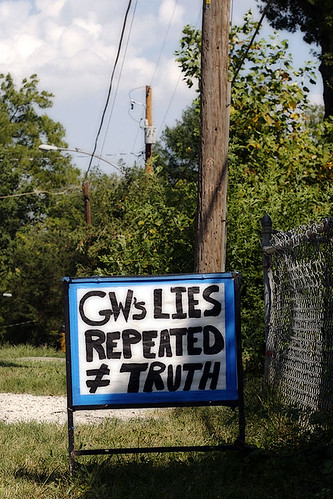
Often the most effective communications are a little rough around the edges. It is the half-dashed email. It it the off-hand tweet. It is the scribbled note left on your colleague’s desk.
Think about it, what do you prefer to get from your lover — an email, an e-card or a hand written note? What gets your attention most?
Seth Godin calls this "keeping it human".
When it comes to communication, marketing or what ever you want to call it, sometimes the slick, polished piece of collateral, corporate video or TVC is not what you should be aiming for. And while it does depend on who your audience is, remember that we all like to feel that we are being spoken to by a person, not a machine. After all, no matter how many times you repeat a message, nothing appears to be quite so authentic as something written, given and created by hand.
 With these words, the much loved Marcus Brown waved farewell to the Web 2.0 world, handing in mulitple resignations for the Kaiser, Charles Stab, Sacrum and the Lord God Almighty. If you even read blogs anymore Marcus, enjoy your new incarnation — Marcus Brown 1.0. You will be missed.
 When you think of a brand, what word pops into your head? What about your favourite products — what word? As a marketer, I often wonder what this one word would be … I wonder whether the messaging that has been constructed is cutting through and whether it resonates with people.
More importantly perhaps, is another question — do these messages build on or extend the experience of the brand? In particular, I am interested in understanding whether people adopt these words as a way of describing their relationship with the brand — and if they do, great. The importance of this, is that the foundations of our brand’s story lives in the WAY in which your brand is experienced. It is not about the MESSAGING or even the DESIGN appeal, but in the way people construct their STORIES of using, engaging and even consuming your brand. After all, every experience is captured as a story.
Think about it … what is your best childhood memory? To explain to me, you need to tell a story. You will have told this story to yourself many times over the years. It will have been reinforced. Changed. Revised with new insight and knowledge. But it is the story that captures the ESSENCE of the experience. And this is why messaging is still important — it provides a framing device around which (hopefully) people will interpret their experience with your brand.
This is why I find Noah Brier’s Brand Tag experiment so fascinating. First up, you observe a logo and then enter a single word response describing that brand. You can do this for as many logos as you wish. But then, the best bit — you can browse the brands and see the responses as a tag cloud — with the more common descriptors shown in large type.
Now, here’s a challenge to all the marketers out there … write down three words describing your brand. Go to Brand Tags and browse to your brand’s tag cloud. How prominent are your three words? Hmmm. Scary.
The Interesting South gang (Emily Reed, Katie Chatfield, Ian Lyons, Gregg Girling, Matt Moore, Rob Marson, Stig Richards, Tim Longhurst, Gavin Heaton, Lauren Brown) breathed a collective sigh of relief around midnight last night. After months of planning, the presentations all came together in a way that held the sellout crowd in thrall.
Our speakers performed very well in front of a large and curious crowd at the Belvoir Street Theatre. As we started, our MC for the evening, Tim Longhurst asked the audience to turn on their mobile phones and contribute to the conference via Twitter or by SMS direct to his mobile phone.
Mark Bagshaw kicked off the proceedings with an astounding speech about opportunity, challenge, disability and optimism — setting a very high bar for all who followed. Roger Dennis encouraged us to look at different industries to identify innovative opportunities for our own. Emily Reed investigated, to all our fears, why marriages fail.
A brief interval saw the audience burst into conversation, inspired by the six word biographies they were wearing. The Belvoir Street front of house team were busy watering the thirsty audience and the staff from Wagamama negotiated the jammed foyer as best they could.
Christian Mushenko shared some everyday heroes with us all. Tim Noonan lived up to his reputation, delivering a daring, daunting and slightly saucy discussion about what it means to be the real you. Annalie Killian reminded us that change is the constant in our lives and was followed by Wade Millican who brought us to a central meditative space in the space of minutes. Zoe Horton brought tears to all our eyes as she stepped through the challenges and delicate joys of genetic counselling.
During the next interval we ran the brave Tereasa Trevor through Marlaina Read’s presentation on the History of Photography. Marlaina was unable to make it to Sydney to present, but she offered to send the slides, and in the spirit of open source, we called for a volunteer presenter. Tereasa stepped up to the challenge via an SMS to MC, Tim Longhurst.
On returning to the theatre, we were treated to Scott Portelli’s awesome images and video of swimming with whales off the coast of Tonga. And then keeping with the animal theme, Ian Johnston asked us whether animals think about what other animals think. Suzanne Dagseven gave an inspiring speech about finding your purpose and escaping the mundane everyday prisons of our own making. Tereasa delivered her own take on Marlaina’s presentation and then Stephen Collins explained exactly how Web 2.0 technologies can be used to make real change — in this case his daughter’s school board. Michael Lister stepped us through the intricacies and amusing challenges of bus route design. Russ Tucker introduced us to his Viral Waistcoat and all the people who have worn it (BUT it seems to have gone missing. If you know where it is, please let him know!).
I will put together some deeper thoughts on the presentations as time allows … but for those who were not able to attend in person, we will share videos and photos as they become available. Thanks to all who participated!
 As my regular readers will know, I am more of a storyteller than a visual artist. But I often find that one of the best ways of expressing my ideas will be in picture form. Unfortunately, my drawing skills are poor. Really poor. So this means finding an alternative way of working.
Where I always try to start is with the story. What is it that I am trying to get across to my audience? What is the starting point and where does the end point lie? What is the journey that we are going to take and what sights and sounds will we encounter along the way? I try to think of it as a train trip — something that has an EXPERIENTIAL element to it.
An essential aspect for me is the metaphor. What is the key theme that I want to apply … and what is the message? How do I build this up along the way? What are the rhythms I want to interject.
And once I have all this, I ask myself — is there some visual that I can use? Where can I find it? How can I bring my story with its key themes together around the visual? Normally I start with a Google image search based around my key messages. If that does not result in a winning image, I often go to Flickr and do the same. But every so often both of these great tools fail me. That is when I take a breath and think about my friends and community. I think blogs and I think Twitter. But rarely do I think Facebook.
However, when I was thinking about this post, I knew that there was an image that I wanted. I just needed to think where it was. And sure enough, I remembered. David Armano generously setup a fan page on Facebook some time ago and saved many of his well-known (and well-used) diagrams to image albums. This is one of them. Be sure to check this great resource next time you get stuck!
