The Dream of Influence and the Democracy of Action

Touchgraph Over the last couple of days there has been a rash of conversation, discussion and analysis around the concept of "influence" — driven by the publication of Duncan Watts and Peter Dodds article on Influentials, Networks, and Public Opinion Formation. David Reich points out that the Fast Company article, Is the Tipping Point Toast, offers a little more context on Duncan Watts and his area of research; and this great post by Noah Brier drills down into the concepts even further.

Basically, Watts and Dodds are challenging the notion that influentials ("a minority of individuals who influence an exceptional number of their peers") are important to the formation of public opinion. This flies in the face of accepted marketing theory and the popularity of The Tipping Point. It also challenges the notion that marketers have of influence — and the way in which this notion of influence makes our lives easier. After all, it helps us target our messaging, our communication and our schmoozing efforts. This is why we dream of influence — it is aspirational. As marketers we like to feel that we have a finger on the pulse of society … but what happens when that pulse flatlines — or simply proves to be a phantom?

Late last year I wrote about the strength of weak ties. This fascinates me. The findings of Mark Granovetter’s research into social networks demonstrated that it is the WEAK ties that lead to action. If this is the case, then influence may only play an important role in the very early stages of branding efforts — to facilitate AWARENESS. But as consumers begin to engage with the brand messaging and various forms of communication, it appears that the power of the social network lies not in the level of influence of any select group but in the susceptibility of the audience to contagion.

Why is this relevant? Because on some level, our role as marketers, strategists or activists is not simply to raise awareness. Our job is to change the way that people think, or act — we want to prompt a change in perception or in behaviour. As marketers then, perhaps our best efforts — and probably our strongest DIGITAL STRATEGY lies in activating the weak links and leaving influence to the mass/traditional media (or to those bloggers who have mass audiences).

It is the democracy of action that drives much of my interest in social media … take a look at what is hot on YouTube or on Technorati. Think about BSP and the way in which a number of people "suddenly" begin writing on a similar topic. It is not the "influentials" who are going to instigate a new trend … they are merely documenting its early rise out of a network of weak links. So while my heart tells me that influencers are important, my head is telling me to go for the gold — and that seems to be quite a turnaround. Now … if only I could model it! 

Brands — Are Bloggers in Your Sights?

Minilarson03 From the outside, the "blogosphere" is a weird, anarchic and slightly self-obsessed world. With over 70 million blogs and countless thousands starting up each day, it is little wonder that most brand managers, marketing directors and CEOs have no idea where to start.

But have you thought about it? Who are these people who write blogs? And how would you respond if a "blogger" contacted you? Do you have a strategy? A policy? Any idea?

Here is how one leading brand responded to an inquiry about their latest ad campaign:

“Unfortunately we are unable to respond to your inquiry because [we do not] … participate with nontraditional media outlets. This practice is in place to allow us to focus on publications that reach our core guest".

Can you guess which brand this is? Have you heard about it already?

To my surprise, this was the response that was sent by Target to Amy Jussel, Executive Director of Shaping Youth. Amy had written to Target protesting about the depiction on their latest billboard — they are, after all, a family brand and one which should have an affinity with organisations such as Shaping Youth. Indeed, Target’s "values" include the following statement:

From national partnerships to local initiatives to our own programs, Target is committed to making our communities better places to live.

This story has now been picked up by the New York Times … and has spread like wildfire. And while the focus of discussion by NYT has been around whether brands should treat bloggers the same as traditional media outlets, there are other things to consider. Amy is not your average blogger — she runs a professional and high profile not-for-profit organisation. She is a parent and she is a regular patron of Target. Before this episode, there was clear a affinity between Amy, Shaping Youth and the Target brand. But the actions (or non-actions) of one of Target’s employees (or PR team) has had an amplified reaction. What could have been done better. Let’s take a look:

  • Keep it real: Clearly Target has a digital/social media strategy of some sort. They have done some high profile work with Facebook and have amassed over 20,000 members to their group — so clearly the response was not completely honest.
  • Quick research: In the time it takes to send a form response to an inquiry, you can easily do a search on the domain, the blog or the profile of the person writing in. In Amy’s case, Shaping Youth clearly appears at the top of a Google search with the following description — "Shaping Youth is a consortium of media and marketing professionals concerned about harmful media messages to children". A moment’s research can help guide your response.
  • Blog it for free: Time and time again, companies ask whether they should blog or not. Clearly a consumer brand could actively use a blog to engage, converse and discuss a range of topics. A blog would have provided a space for this discussion and would have allowed them to enter this conversation in a more natural and harmonious way.

For brands, the question might be "are bloggers in your sights"? The reverse is certainly true — brands are in the sights of bloggers. And while one blogger acting alone may have limited impact, en-masse, it is a very different ball game. Perhaps Target could benefit from the social media insight and skills of Mack Collier, Drew McLellan or Christina Kerley.

What do you think? Is TargetGate a parallel to Dell Hell?

Blending Trends and Brands in 2008

Trendblend2008Today was a bit of a Ross Dawson fest for me. Not only did I listen to the podcast that he recorded with Stan Relihan, I also found this cool Shanghai Tube-inspired map of trend predictions for 2008 (download the PDF here).

While I don’t necessarily agree with the mainline destinations on the map, they do provide great food for thought. However, I do like the way that different trend lines intersect (eg where politics and demographics meet at a level crossing on the outskirts of a town called Anxiety), and the use of a recognisable map structure to convey a complex information architecture and messaging is brilliant.

The podcast, on the other hand, contained some gems. Ross talks about the way that social media is the future of organisations — positing that enterprises now manage conversation flow in, through and out of the organisation in ways that traditional media companies do. This means that similar disciplines and approaches need to be put in place to harness, transform and unleash this information/knowledge as a way of delivering competitive advantage (my explanation).

I also found Ross’ definition of Web 2.0 refreshingly simple. He says, Web 2.0 "… transforms mass participation into something valuable". From a brand and advertising point of view, this has some obvious implications:

  • What is valuable to your brand
  • What kind of situation/event would prompt your audience/consumers to participate
  • How will you measure this

With these three questions in mind, make sure you ask your agency/marketing team how participative media/web 2.0 is going to transform your business this year. Run these answers across the Trend Blend map and you may well have the seeds of a digital strategy sitting in the palm of your hand. It is already shaping up to be an interesting year.

Finding the Gold in Digital Measurement


Daily Microcosms 1
Originally uploaded by David Bez

Remember when the daily digital microcosm revolved around "hits". There was much talk and bravado about the hits, the "eyeballs" and (in those advanced shops) the "visitors". We puffed out our chests, talked up the "power" of the Internet, and tried to convince businesses to trust our expertise as we surreptitiously added their domain names to our vault of registrations.

Then, as the conversation dulled and we all got used to the basic metrics, we reached for some other measurement. We shifted to "up time", "click throughs", and when pushed "unique visitors". But again, all these measures seemed loose, too interpretive and indistinguishable. They didn’t apply to "brands", just websites … they didn’t work for the business consultants, the CFO or the board … and our own reluctance to commit to concrete measurables saw "digital" initiatives pushed to the side as "non-core" capabilities.

But then a strange thing happened. The web became "accepted". Business models emerged. Amazon blew the covers off the technology and showed that there was money to be made … and Google … well, Google just is.

Yet despite these well-known successes, for the vast majority of digital agencies (and marketing departments) out there, the web is still green fields. Businesses continue to think that they can contract an agency to build a site for $30-$50k while spending multiples of this amount on non-descript, untargeted TV advertising. The old ways die hard.

Some time ago, Katie and I were working on a web project and we needed to find a new way of measuring activity. Not for our clients, mind … but to help us understand what was working and what needed to be improved. We were thinking engagement, brand and conversation. We were thinking aggregation as well as targeting, we were aiming for word of mouth, conversion and funnelling.

When we started doing this about three years ago, it was speculative, but over time it allowed us to map and understand online consumer behaviour. It demonstrated to us that page views were as important as click throughs and that content strategies, multi-format integration and "directed play" all helped to build your brand, excite your audience and encourage loyalty. We called it, loosely, "time with brand".

Herb points to a study that confirms this approach. The report explains that both implicit and explicit memory are important in building brand recognition — and this, in turn, means that it is important to measure impressions as well as the more performative metrics. Sounds obvious now … but it makes you think — what is next for metrics and measurement. And who will seize that ground. There is a goldmine waiting.

Fight for Kisses

Wilkinson_soc_tatt One of the challenges of digital storytelling is combining consistency and expertise. On the one hand there is a need to construct a simple and compelling message and then you need the expertise to ensure that the message resonates with your audience in a range of formats, is flexible enough to work in a variety of formats … and has a certain "talkability" … that it induces conversation.

Here is a nice example of integrated, digital storytelling. It is not comprehensive, but what it does, it does well (apparently this has been floating around for some time, but I only just saw it over at Scamp’s blog). It is a TVC by JWT France … but it also has a very nice microsite attached to it.

For me, this works for the following reasons:

  • It has a Promiscuous Idea — at the heart of the messaging is a "promiscuous idea" (this was my topic for the Age of Conversation) … this is a concept that finds its way out — it reaches the audience, it taps into our emotions and it drives our creative processes.
  • The tactical execution IS the strategy — I have ranted on about this before, but this is a great example. Watch the ease with which the "consumer" moves from passively watching a TVC to actively exploring the website to participating in some of the digital activites (making a tattoo, playing a game) … to COMPETING against each other for a high score. BTW … Anyone who can find a way to measure time with brand/immersion for these types of projects will be hailed as a god 😉

I would have liked to have seen some more viral enablement … being able to "send to a dad" etc (or perhaps this was there but escaped my school boy French vocabulary), but overall it is a neat execution. And, as Scamp points out, the Freudian undertones are delicious and slightly weird.

Oh, and I thought it would be of particular interest to John Johnston and any other Freaked Out Fathers. Now you know what to expect 😉

Maslow + Armano = Digital Strategy?

Armano_ripples
Mapping out a marketing strategy is hard work … even when you have all the templates, approaches and tools at your fingertips, there is no substitute for deep thinking, creative play and brand insight. I guess, this is where you really earn your crust.
But when you extend your marketing strategy into the world of social media, it all becomes a lot murkier. You are dealing with a range of emerging networks and application systems, communities that are in a perpetual state of flux (growth and decline) and technologies that are unreliable.

One of the best ways of visualising this that I have seen is in this post by David Armano. It shows how the fragmentation of the social media landscape can both help and hinder the execution of your social media strategy. What the diagram shows is the multiple levels of influence that a brand has … often simultaneously. The ripples that occur on the level of an open network (such as the blogosphere) are amplified once they cross-over from the open network into the closed networks of personal/professional relationships (such as Facebook).

But how does this work and why is this important?

MaslowripplesSome time ago I wrote a post on how it might be possible to apply Maslow’s hierarchy of needs to the world of blogging. What I was trying to do was think through the connection between personal authenticity and writing, and attempting to explain the impact of this authenticity on a community. It seems to me, that the closer a blogger gets to the top of the blogger’s hierarchy, the more likely the community is likely to move from influence to action. Think about it … a recommendation from someone you trust is likely to move you to action pretty quickly. So if we superimpose the Maslow hierarchy on top of David’s Influence Ripples image, we end up with something like the diagram above (ok I hit a wall on the design side).

What is important to remember in all this, is as the ripple becomes more amplified (getting closer to the pinnacle of the pyramid), the NATURE of the engagement between media and community/audience changes. It becomes more personal. It becomes permissive. It intensifies. And it is this intensification that, in turn, drives the approach that brands must take when developing the messaging, conversational frameworks and activation elements of their digital strategies. Simple? My head hurts.

A Map For Your Digital Strategy

Webtrendsthumb450x318
Getting from A to B is easy if there is a straight line. But there never is a straight line, is there? There are complications, challenges, issues and risks. There are fears and behaviours to be overcome, politics to entertain and clients to appease. And when it comes to digital strategy, you have to add in technology and all the latent and real fears and anxieties that come along with it. But, from a pure technology point of view, it is now easy to navigate thanks to these folks.
Oh, and how did I find out about it? From the new source of social media goodness over at BellamyHayden.

Mobile Gets Serious

It is always interesting to watch the way that innovations are driven through a society. What starts out as a simple idea builds and grows, morphs and is adapted … until finally we get something like the mobile phone. At first they were large and unwieldy, but as technology improved the batteries were reduced in size and no longer needed to be carried in a case.

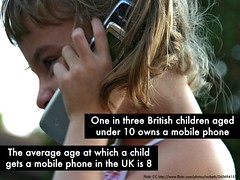
Nowadays, we can pick up mobile phones so small that they are hard to hold. This makes them perfect for kids.

Meanwhile, the underlying technology and the supporting infrastructure has also improved, meaning that I can now watch TV episodes, listen to podcasts, play games and use eBay wherever I may be. For marketers this is gold … we are forever talking about "playing where our consumers play". We talk about using their words, hanging out in their MySpaces or getting up and into their Facebook. But for all the talk and for all the investment, there are few brands who realise the all-pervasive opportunities opening up through mobile networks. In fact, many brands simply do not see it.

And fair enough.

It is not actually about marketers and agencies and brands. It is not even about technology or telcos. It is about people. It is about the way that we are changing individually and collectively … thriving more on connection than isolation. So what started as a gadget has now become an accessory … a standard item in the utility belts of our lives. This, for us, has been a shift — but for the 8-10 year olds, or even the tweens and teens, this is status quo. In fact, it is almost OLD.

Should brands begin thinking about mobile digital strategies? Only if they want to remain relevant.

Car Marketing Gets Sexier, I Mean … Smarter

Bmw_m3_challenge006 I have always been disappointed by car marketing. Sure there are the occasional diamonds, but in general, the marketing of cars seems largely to miss the mark. This is especially true online where sites provide wallpapers, 3D animations and feature lists. But none of this adequately captures the aspirations and emotions of the car buying public. It doesn’t feed into our extended sense of self, it doesn’t play into the visceral excitement of driving … and certainly doesn’t capture the palpable energy of the fan forums that have built up around the various manufacturers.

That is why I am excited by this new initiative from BMW. Building on the digital efforts of BMW films, the switch has been made from passive entertainment to immersive interaction — creating a new computer game that allows you to drive the latest M3. This is an interesting move into a cross-over category for serious games where the elements of online/computer games are employed with a serious or business objective in mind (let’s not forget selling cars is big business — as is gaming).

With the M3 Challenge, rather than waiting months for a test drive, potential buyers can run a few laps of the German classic Nurburgring course. Of course, this will build brand allegiance with not just potential buyers (this is about as close as I am ever going to get to drive an M3), it will filter down to all car lovers.

What I am keen to find out is whether there has been an integrated viral/social media execution built into the game. For example, high score submission, challenge/invite a friend, auto-blogging/in-game photo uploading etc. I will download and let you know …

File size danger — the download is a whopping 340Mb. Buckle UP!

Put on Your Strategy Face

Despite my flurry of posts on Facebook over the last week, I still spend very little time there. I really am just a newbie, but can already see the potential. There are plenty of ways of self-selecting, self-categorising and activating your own persona. There are plenty of ways to interact with or avoid others … and there are some nice, fun widgets to play with. Even better, you can more actively “follow” a friend in their movements, tastes and interests than is possible via Twitter … which means that you can choose to play in the same spaces as your friends without intruding on them.

The approaches and behaviours of people who use these social networking sites is fascinating. I have been surprised even by my own interests and curiosities. For the digital strategist, Facebook can be a veritable gold mine or a massive jungle trap. One false move and you can be booted out.

If you are like me and struggling to find your way around Facebook, take a look at Jeremiah Owyang’s post on Facebook terminology. It is a crash course in understanding the ins and outs from a strategic point of view.

Now, all I need is a pipe.

Blogged with Flock

Tags: ,