Enterprise 2.0: It’s Not Your Dad’s Company

IMG_0971.JPGTake a look around. Look at the people in your office, at the desk next to you. Look into the faces of the people who you pass in the corridor. They look the same, right? The same faces have greeted you year in, year out.

Well, get ready, because the workplace is transforming, and it is happening right under your nose.

Those peppy Gen Y kids who were brought into the business to inject some life and energy are moving up. That’s right, they have been steadily building their experience, lobbying the line management and pushing through the KPIs in the yearly 360 degree reviews … and guess what? They are now making business decisions. Yes, indeed, Gen Y are reaching the management level, and working the matrix — and they will bring a new style and a new approach to your business.  This will transform the way that we all work. Indeed, it has to. 
Picture 080.jpgAnd one of the biggest transformations will be right there on the desk in front of you. That locked down desktop that has served you well for the last couple of years will soon be replaced. Gradually that sparse Desktop will be replaced by a series of icons and widgets … and horror of all horrors, you will find the work computer looks increasingly like your kids PC (or dare I say it, a Mac!). The new management will be prising the dead-hand of the IT group off the controls and installing new applications and adding new links. There will be Twitter and Facebook and LinkedIn and Friendfeed. There will be various shades of SaaS (software as a service) delivering on-demand enterprise scale business processes and systems that you can reach no matter where you are, all courtesy of “the cloud”. Sure there will be the in-house enterprise systems … but they too will play nicely with whatever you need them to. After all, it’s not your Dad’s company anymore. 

Fin de siecleBut while this sounds like a madhouse of change for the sake of change, stop again, for a moment. Get up and walk down the corridor. Your workplace is about to undergo a large-scale transformation … millions of baby boomer workers are set to reach retirement age in the next few years, and the next wave of Gen Y knowledge workers are stepping in to replace them. It’s not that the systems, processes and business models are being changed on a whim – they are being changed because the people who DO the work are changing. Like any living organism, the organisation is also transforming … shedding its skin in a kafka-esque tribute to the new age.

And while these new systems and processes may raise your eyebrows and your blood pressure, there is actually some as-yet unrealised business value in platforms such as Twitter and Facebook. Aaron Strout and Joe Cascio clearly explain where micro-blogging platforms such as Twitter can deliver business value:

  • Emergency broadcast system
  • Knowledge management
  • Training
  • Expert identification
  • Seeing the connectors
  • Inclusion of external stakeholders

All of these elements will be of increasing strategic importance as the composition of the global workforce turns over on itself. And while there will be issues and questions around security, scalability and so on, they pale into insignificance against the larger challenges of global competition, attracting talent and delivering value to customers. And who knows, the widespread adoption of these tools may well inadvertently fullfil the promise of the Cluetrain Manifesto — "humanising" the brands and businesses that we come in contact with every day.

It really is not my Dad’s company.

Update: Marigo Raftopoulos has a great post encouraging us to understand this business transformation as a change from economies of scale to economies of (I presume personal/professional and social) networks.


Social Media Saturation Sees the Rise of the Business Designer

While we continue to see cycle after cycle of new applications and services arrive in the Web 2.0 space, it seems for the most part that we are seeing incremental innovation. This type of innovation builds a new step on top of an existing innovation.

yea, i look good in a suitWe are also reaching a certain maturity in the way that marketers work with social media. There are now case studies on the effectiveness of social media, there are tools that help us measure and react to conversations and there are an increasing number of corporate roles for "community managers" or even "directors of social media".

So where does innovation go?

In this environment, the focus is no longer on learning the tools, but on refining the way that we interact with them. It is about bringing social media into our businesses, integrating it with our other marketing efforts and focusing efforts in a way that deliver business results. This will see ongoing debates about "where" social media belongs — PR, corporate communications, marketing, customer support, innovation etc — as well as a scramble amongst agencies to deliver "social media services" to clients.

It will also see a rise in the importance of the "Business Designer".

The MillionaireThe Business Designer does not sit in a creative studio. Rather, she operates across business units — touching marketing, customer service and new product design. The BD has a finger on the pulse of finance and lives cheek-by-jowl with the legal team. There is the touch of the management consultant in the way that the BD navigates the org chart — but also the fervour of the evangelist. She may be T-shaped. She may be a green egg. But above all, she is an experienced business professional. That’s right — she knows how to get things done.

standing outSocial media saturation is not going to kill innovation in the Web 2.0 world. It is simply going to commence the heavy lifting required to move social media with all its benefits, some of its quirks and much of its energy into the "enterprise space". The BD will perform the important role of "change manager" or perhaps "transformation manager" — for the domino-like changes that will occur in every facet of a business will change the nature of the enterprise. What has been rough and ready in the consumer space will become refined and repeatable in the business world for the BD will select and orchestrate the practices, tools and approaches that correspond with a company’s business strategy. Of course, this will breed a whole new round of innovation in the technology space — we have already begun to see this with Yammer, the business version of Twitter.

And there will be a corresponding transformation in the process of business, and the goals and approaches of groups charged with managing brand touch points. This goes without saying.

But by far, the most radical transformation will be the one thrust upon us by the generational change that is now under way. With 60 million baby boomers about to be replaced by 60 million Millennials, the workplace will never be the same again. Managing the "knowledge transfer" that needs to take place over the next 5-10 years will be a fundamental responsibility of the Business Designer.

Plurking Great

Plurkcolor I am always surprised that the makers of Web 2.0 tools don’t fully understand the dynamic and challenging nature of the communities who populate, use, build and evangelise their systems. For example, why would a hugely successful Web 2.0 property like Facebook carelessly launch Beacon? Why would Twitter NOT respond more unequivocally to claims of harrassment? Given that the business model around Web 2.0 platforms is about leveraging the mass of aggregated user data to generate insight/targeted advertising etc, how is that these platforms seem unable to gauge the temperament of their communities? Could it be that they are ape-ing big brands and are simply not listening to the abundant digital voices?

Clearly these leading Web 2.0 platforms have built what we could easily consider unassailable user bases. Facebook carries millions of users each day and has the backing of Microsoft. Twitter appears to be hovering around the 2 million user mark and has attracted a great deal of goodwill. However, what happens when shifts occur? What about extended downtime?

Twitter has successfully modified the behaviour of its user base in such a way that we have all come to rely upon it to fulfil a range of communication needs. But ongoing reliability issues has seen a number of defections to other services that have followed quickly on Twitter’s heels. One such service is Plurk.

However, when people who are used to using Twitter arrive at the Plurk interface, they encounter problems. They don’t get it. They find it confusing and unintuitive, maybe even over-engineered. I also experienced this … but felt that there was something different about Plurk. And anyway, I realised that I was looking at Plurk through my "Twitter Goggles" — and I was finding it lacking (as were others). — but I knew that I needed to allow Plurk the benefit of the doubt.

Over the last couple of months, the Plurk team have been slowly but surely improving their system. New features, improvements and so on have been appearing regularly. And earlier this week we were given a new series of selectable key words. One of my favourites is "wonders" … I found that I was using it quick consistently to communicate with my small community of followers — "Servantofchaos wonders what is going on today". "Servantofchaos wonders why he is still up late writing a blog post". It seems that the Plurkers have been  surveying the most popular "freestyle" words and have added them to the drop-down list. Great!

But while I was impressed with the simple addition of the word "wonders", I was a little surprised to see that it was coloured a dull grey. That seemed like an uninformed decision. So I wrote a message wondering why this was the case … and in the space of a couple of hours, the word "wonders" was transformed into a beautiful, vibrant colour. Were the Plurkers listening? Was it just coincidence? With my Twitter Goggles on, I would claim it was coincidence … that there was no-one listening. But I have a secret hope … that they certainly were listening to the conversation, and they went a step beyond and used this intelligence to change (ever so slightly), a system that is going from strength to strength. If they were listening, it’s plurking great!

Measuring the Hybrid Car ROI

A car purchase is the second most expensive investment that an individual is likely to make (the first being their home). And in that respect, consumers come close in behaviour to their B2B counterparts — after all, vehicles are expensive, have ongoing cost requirements and (whether we like it or not) reflect on our own sense of self. Accordingly, when it comes to purchase time, we shop around, do our homework, check blog posts, search engines and customer satisfaction ratings. We ask friends for recommendations, take a keener interest in the cars we pass in the street, and think through the implications of this major purchase.

Recently though, the greater awareness (and concern for) the environment, coupled with ever spiralling oil prices has seen a massive spike in the popularity of hybrid cars. (Some US states have gone so far as to mandate the production of eco-friendly cars.) But, even a cursory glance at the prices of hybrid cars shows that they are significantly more expensive, meaning that you will need a longer timeframe before your hybrid car breaks even with its petrol equivalent.

EcoCalc However, there are other factors at play in the calculation of ROI — and Todd Andrlik has developed a great online tool that brings carbon emissions into the calculation. Originally developed to assist his employer, Leopardo Constructions, in calculating the ROI impacts for their fleet of company vehicles, the calculator has now been made widely available. Simply enter a few variables about the vehicles you are comparing, press calculate, and you will receive data about fuel savings, unreleased carbon emissions and ROI timeframes. Check it out here.

It is a wonder that companies like Toyota or Honda, makers of leading hybrid vehicles have not produced something similar.

The Gen Y Guide to Web 2.0 Work

Make no mistake, there are some challeging times ahead for companies. And one of the big ones is dealing with the influx of new employees and the successful transition of young managers into the ranks of decision makers. Beth Kanter discusses social media as a form of innovation within NGOs here and points out this great slideshow from Sacha Chua. A taste of things to come? It is only a matter of time 😉

Get Your Head Out of the Clouds!


Day 86 – Head in the Clouds
Originally uploaded by margolove

Greg Verdino’s challenging post Beyond Knowledge has generated some great discussion on the nature of knowledge and the impact of the Internet/Web 2.0 on how we all tap into this massive "crowdsourced brain". I have been fascinated by the concept of knowledge management for years and actually ran a KM group for IBM years ago — and what I learned then (and what Greg clearly identifies upfront) is that knowledge is not the domain of technology (yet) but of people.

You see, there are lots of really smart people out there in the world. They can be working in your business, they might be sitting in the cube next to you, or they could be on the other side of the planet. But how do you know what they know? How can they manifest this in a way that allows their expertise to shine out and reach the person who needs it? For this to happen you need a couple of things — you need:

  • A platform for communication
  • A method of organising the data
  • A way of connecting it all up

In the web 2.0 world, we have platforms coming out our ears — we have blogs, wikis, video sharing sites, podcasts etc. We also have tagging and bookmarking to categorise and share our interests. And we have search engines and rating systems etc to connect it all up. But all this lives in the cloud and is the domain of cloud computing.

It is using all these elements that you, dear reader, are able to find my often misguided marketing meanderings. It is what allows the thoughts and ideas of one individual to reach out beyond the circles of life limited by time and geography. But why does this breakthrough? As Greg points out, I think it has to do with seeing the value in a shift from knowledge to conversation (or as Greg says, "connection").

When I worked at IBM we held seminars and meetings. Lots of them. We showcased ideas and project work. We wrote about them on the intranet. We championed the individuals whose efforts and breakthroughs made innovation possible. And we talked. And the thing that worked most effectively was the lunchtime meetings … having one person tell the story of how they solved a problem. It was like a lightening rod … conversation erupted, ideas leaped across the room. It was great.

So we decided to go bigger. While the virtual meetings were well subscribed, there was a demand for face-to-face storytelling. Everyone loved the ideas but also wanted to see the face behind the innovation — and our first series of seminars filled lecture halls to overflowing.

We were building a forum for ideas. But there was a business purpose here … I was also looking at commercial viability. I needed to be able to see a future opportunity — a patent perhaps or the licensing of code. But I also needed to see something else — a personal champion. As Greg points out, with knowledge freely available it becomes a commodity. A great idea can string separate knowledge chunks together — but it takes a resilient person and a network of supporters to push through the barriers of innovation apathy to turn an idea into something tangible. It’s no longer a case of "what you know" nor of "who you know" but of:

"who knows you + knows what you know".

And this is where Web 2.0 comes in. It is now far easier to create and enable these conversations via technology (in fact, this post is part of a conversation that is also occuring points out) or the sheer human pull of a good storyteller to make knowledge valuable.

Greg Verdino also promises another couple of posts extending this topic. I am looking forward to more conversation!

Need to Plan Visually? Now You Can!


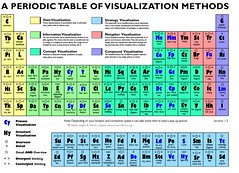
  visualisation-table 
  Originally uploaded by servantofchaos

I love the way David Armano translates concepts into visuals. I am envious. It seems effortless (which is a sure sign of mastery).

I, on the other hand, have little to no visual skill. Well I can do composition and layout, but not design. Not like a real designer. In my last job I would often be working on a whiteboard discussing the features of functions of a website and begin drawing what I was thinking only to have one of my team stand up, remove the marker from my hand and begin to visually translate for me (yeah I am that bad).

My tool of choice is words. Storytelling. But after years as a consultant, I also like diagrams. I like flows. I like to map abstract ideas. It is also partly why I am fascinated by the concept of "innovation" — how do you turn the abstract into something intangible into a real business outcome (hmm … sounds a lot like branding now that I think on it).

That’s why, when I saw this Periodic Table of Visualization Methods over at the fabulous and insightful Innovation Feeder blog, I gasped out loud. Not only can you use this as a resource to help you work through an idea, build a process or pull together random elements, this interactive table also gives you popup examples and descriptions. Awesome. I am sure Katie will like this.

Blending Trends and Brands in 2008

Trendblend2008Today was a bit of a Ross Dawson fest for me. Not only did I listen to the podcast that he recorded with Stan Relihan, I also found this cool Shanghai Tube-inspired map of trend predictions for 2008 (download the PDF here).

While I don’t necessarily agree with the mainline destinations on the map, they do provide great food for thought. However, I do like the way that different trend lines intersect (eg where politics and demographics meet at a level crossing on the outskirts of a town called Anxiety), and the use of a recognisable map structure to convey a complex information architecture and messaging is brilliant.

The podcast, on the other hand, contained some gems. Ross talks about the way that social media is the future of organisations — positing that enterprises now manage conversation flow in, through and out of the organisation in ways that traditional media companies do. This means that similar disciplines and approaches need to be put in place to harness, transform and unleash this information/knowledge as a way of delivering competitive advantage (my explanation).

I also found Ross’ definition of Web 2.0 refreshingly simple. He says, Web 2.0 "… transforms mass participation into something valuable". From a brand and advertising point of view, this has some obvious implications:

  • What is valuable to your brand
  • What kind of situation/event would prompt your audience/consumers to participate
  • How will you measure this

With these three questions in mind, make sure you ask your agency/marketing team how participative media/web 2.0 is going to transform your business this year. Run these answers across the Trend Blend map and you may well have the seeds of a digital strategy sitting in the palm of your hand. It is already shaping up to be an interesting year.

Facebook and the Platform of Influence

I have been thinking over Microsoft’s interest in Facebook … and wondering what it is that is driving their strategic decision making. Sure there are strong customer acquisition drivers which become even more compelling when you consider this post by Charlene Li (explaining that this acquisition price is LIFELONG rather than transient — but how long is "lifelong" in a Web 2.0 world?).

But the more I think on this, the more it makes sense. You see, Microsoft are not really buying customers, they are buying a PLATFORM OF INFLUENCE. The Platform of Influence is a precondition for what Ross Dawson calls "attention profiling" (one of his six trends tranforming living online). Ross explains attention profiling in this way:

4. Attention profiling We are moving to a world of infinite content. The proliferation of blogs, online publications, podcasts, and videos means we are swamped with information. The first phase of the response has been user filtered content or collaborative filtering on sites such as Last.FM and scouta.com, giving us personalized recommendations. The next phase will be to develop detailed profiles of our interests and behaviors across different categories of content, so that we can access or be presented with content in a way that matches our available attention relative to the relevance and interest of the content. The two most promising initiatives in this space – Particls and illumio – have both been launched in the last couple of months. We can expect it to become a completely seamless process to find or be given what we want from an infinite landscape of content.

While I see the value in attention profiling, the very concept raises many questions. You will, no doubt, have others, but mine are:

  • Discovery — there are some things that I like about being pre-emptively supplied with information, services or even products based on my past usage and predictive usage patterns. However, this removes the enjoyment of discovery — something that is the reward for my curiosity. Is it possible that a by-product of this predictive sampling is the dampening of curiosity — or will this human trait simply find a new outlet?
  • Privacy — how many of us will be happy to sign-up for personal profiling? It sounds great in theory, but it presumes integrity and security on the part of the service provider.

I think this is where Facebook comes in and precisely where there is potential value for Microsoft. Not only does Facebook already perform low level personal filtering, it already enables some of the collaborative filtering that Ross discusses. For example, I am much more inclined to join a group, read a post or attend an event that is already on the list of my influencers. This means that the distinction between decision and action is compressed and accelerated — mostly thanks to the influencing power of my personal/professional network. Microsoft has wanted to bring its brand into our lives more seamlessly for years … and this may well prove to be its best opportunity yet.

Blogged with Flock

Tags: , , , , ,

IBM Turns to Gaming as Education

There has been talk for many years about how gaming or game theory can have positive impacts on brands, marketing and even learning and retention. Marketers have been quick to apply traditional marketing approaches to the gaming world — product placement, in-game advertising and so on. Educationalists on the other hand have applied gaming snippets to their curriculums — especially as more and more learning moves online — finding benefits in terms of awareness, retention and knowledge transfer. But IBM is taking this a step further … using the closed-world of gaming to create an immersive learning experience that effectively crushes the distinctions between the IBM brand, the service/solutions that they offer and the learning/certification options available.

This game which will provide simulated learning (based on IBM’s new services oriented architecture (SOA) and business process management (BPM) solutions) is still in beta testing with universities and business partners but it will be interesting to see how it plays out.